Wildebeest Migration Safari in Masai Mara

The Wildebeest Migration Safari

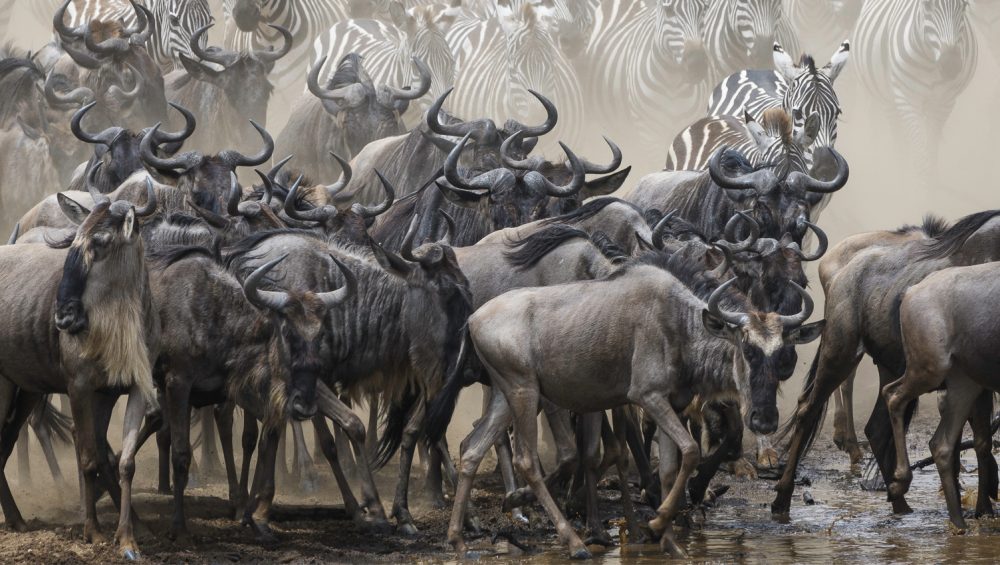
The wildebeest migration is an annual mass movement of wildebeests, zebras and gazelles over the Masai Mara and Serengeti ecosystems. It follows seasonal rains as herds move in search for fresh pastures. The migrating herds move through dangerous Big Cat and Nile Crocodiles territories.

Wildebeests are the majority of the herds numbering to 1.5 million. Zebras range from 250,000 to 300,000 individuals plus other antelopes including Thompson gazelles and the Topi. Wildebeests belong to the antelope family and entirely depend on the grass of the open savanna and woodland plains.

These migrating herds cover a total distance of about 800 to 1000 kilometers along the migration circuit if they survive. Survival on this journey is  limited because of predators and the steep slopes on the River banks where some break their legs trying to Jump over.

The Wildebeest Migration Month Per Month

The herds are always on the move from one month to another until the calving period where over 500 calves are borns a day. A reasonable number of these are hunted by the predators, taking advantage of their vulnerability. Below is a brief journey of the great wildebeest migration every month. It helps one to plan accordingly on the best month to visit depending on where the wildebeests are.

The Migration from January to March

The wildebeest migration is a continuous cycle and there is no particular point where the herds stop. By January throughout March, the herds would have moved stretching over southern Serengeti through the Ngorongoro Conservation Area and Ndutu. They do not necessarily go through the Ngorongoro crater floor but the floor has several wildlife species including wildebeests. By this time they would have returned from Masai Mara and found pastures they thrive on.

This period is a transition to the short rains of March and favors the growth of lush vegetation. It also doubles as the calving period with an estimate of about 7,000 calves are born daily rejuvenating the herds.

During this period you can enjoy Discovery Journeys adventures in Ngorongoro, Ndutu Conservancy, and southern Serengeti. There are high chances of seeing a birth one game drives and some predators in action. Serengeti National Park is a lion conservation unit with one of the highest lion populations in the region. Other big cats present include leopards and cheetahs. These entirely thrive on the herds and hunting during this first quarter is even easier for them.

As April sets in, the wildebeest herds start to move towards central Serengeti. This is a wet season coupled with rains that favor more vegetation growth. It provides plenty of pasture for the grazers enabling the calves to grow steadily as the mating season also begins by the end of May.

The growth of a lush vegetation and tall grasses provide a hiding and hunting ground for predators. Stealth hunters like leopards take down their unsuspecting prey after taking camouflage in the tall grasses. The herds continue moving towards the western corridor of Serengeti National Park until they Cross River Grumeti. River Grumeti has deadly crocodiles that eagerly await the herds taking down the weak ones.

River crossings are a highlight of the migration and the Grumeti River crossing is the first river obstacle ahead of the Mara River crossing. During the wet season is a low tourist turn up resulting into exclusive wildebeest migration safari experiences. A visit to Central and Western Serengeti is exclusive with more opportunities for wildlife viewing and photography. These are our kinds of preferred Discovery Journeys that are more experiential and rewarding.

The wildebeest Migration from June to July

As June sets in, the Grumeti River crossings continue as more and more herds continue with their quest. A number of these are seen on the southern banks of the River waiting to jump over the deadly crocodiles. Those that make it continue through western to northern Serengeti where they meet another River crossing of the Mara River. Mara River crossings are tougher as the wildebeests jump over the steep River banks with some ending in the jaws of the awaiting crocodiles.

The Mara River crossings continue throughout July and are most spectacular. June and July are a dry season that doubles as a peak tourist season with the highest tourist numbers. It is advisable to book your wildebeest migration safari in advance as lodges and camps get fully booked. By the end of July, a number of these herds would have crossed over to Masai Mara. Mara River crossings are continuously enjoyed along the River till mid-August when they last herds cross.

The Migration from August to October

As more herds continue crossing the Mara River, they evenly spread over the Masai Mara ecosystem.  Mara River has fluctuating water levels that affect the wildebeest migration. In situations when the water levels are high, it becomes a challenge for the migrating herds to cross.

Hunting and fighting for survival continues throughout the migration even in Masai Mara. In September and October, the herds continue moving through Masai Mara drifting to the eastern part of the reserve. Masai Mara National Reserve is therefore the best place to be for a wildebeest migration safari from July to October. Rainfall sets in from mid-October as the herds drift southwards where they cross the Mara River back to Serengeti.

The Migration from November to December

The migration herds continue their journey southwards across the border into northern Serengeti National Park. By this time the pastures would have grown and the rains in October and November encourage more pastures to grow. The expectant would be about to deliver and the calving period eventually sets in for the cycle to begin again.

Beyond the wildebeest migration visiting Serengeti and Masai Mara for a safari is very rewarding. The ecosystem is home to different bird species, and big five mammals including buffaloes, elephants, rhinos, leopards, and lions. All these can be seen while on game drives in the different sectors of the parks.

Best time for the wildebeest Migration Safari

The dry season is generally the best time for safaris in East Africa including the wildebeest migration safari. This is from June to September when the herds are crossing from Serengeti to Masai Mara. Here you will get to enjoy the Mara River crossings and get a chance to see the predators live in action.

The period from December to March is also great for having a wildebeest migration safari. Being the calving period, several predators take advantage of this and the herds this time around are in the Ngorongoro, Ndutu, and Southern Serengeti areas so when considering the migration these are the places to visit.

We tailor-make safaris to Serengeti and Masai for 3 days and above. We recommend one to spend more days on safari for more wildlife viewing opportunities. You can check out our safaris including Masai Mara and Serengeti Safaris.

Mountain Gorilla in Bwindi Impenetrable National Park

Mountain Gorilla Trekking in Uganda

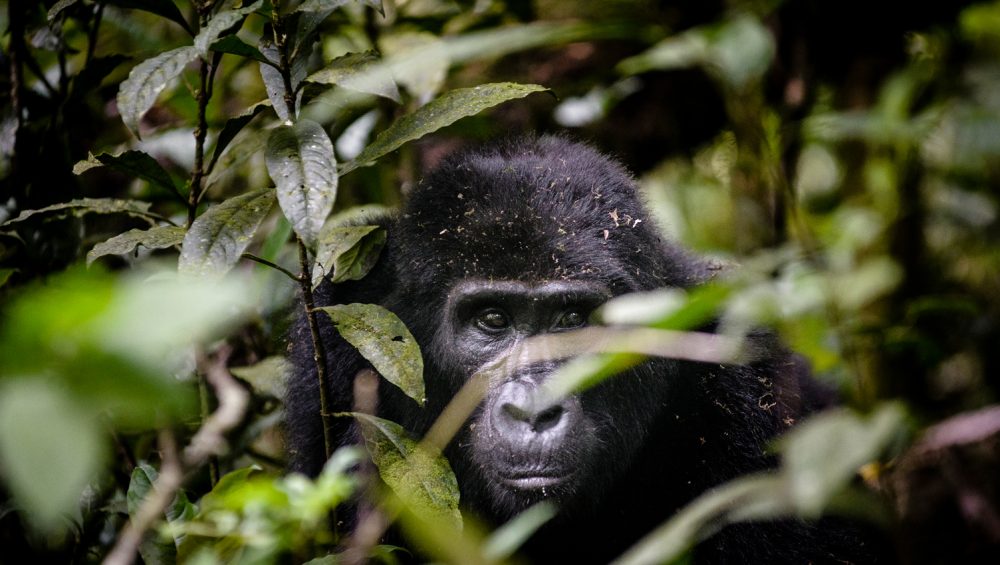
Mountain gorilla trekking is currently the most desired primate trekking adventure in East Africa. Mountain gorillas are primates of the Apes family that live in the forested mountains of East and Central Africa. They live in families of up to 20 individuals that are headed by a dominant male gorilla called Silverback. With over 95% DNA similar to humans, mountain gorillas are among man’s closest primates. It is because of this that many adventure lovers seek to trek the forested mountains to meet them.

On the Entire planet, mountain gorillas only live in the Virunga mountains, a chain of volcanic mountains along the Rwanda, Uganda and Democratic Republic of Congo border and in Bwindi Impenetrable National Park in south western Uganda plus the adjacent Sarambwe reserve in the Democratic Republic of Congo.

The mountain gorilla population is currently estimated at 1000 individuals which is critical of any wildlife species. Mountain gorillas are still threatened by poaching, habitat loss, and climate change effects.  This could see their population reduced if not well conserved and preserved.

Uganda Gorilla Trekking Destinations

Bwindi Impenetrable National Park is Uganda’s leading mountain gorilla trekking destination. The park has over 450 mountain gorillas which is almost half of the entire mountain gorilla population. Mountain gorillas live in families and are evenly distributed in the four different sectors that Bwindi Impenetrable  National Park has. The sectors include Buhoma, in the north of Bwindi with 6 mountain gorilla families. Buhoma is the oldest sector of Bwindi where the first mountain gorilla family was habituated and opened to tourism. 

The Ruhija sector is located in the eastern part of Bwindi. It has a total of 4 gorilla families that are habituated and open for tourism. Ruhija is about an hour’s drive from Buhoma and therefore one can track mountain gorillas coming from Buhoma. You would however have to wake up early in the morning for the transfer so that you arrive at the park headquarters in time for the briefing.

The Southern Sectors of Bwindi

Rushaga sector is located in the southern part of Bwindi impenetrable national park. The sector has 8 habituated gorilla families which is the highest.  Rushaga has an ongoing mountain gorilla habituation with provision for the gorilla habituation experience. Only four people are allowed to take part in this gorilla habituation experience. It takes you behind the scenes following the life and daily routine of the mountain gorillas.

Nkuringo sector also located in southern Bwindi. The sector has 4 habituated mountain gorilla groups and offers an exclusive gorilla trekking experience. The terrain here is steep and requires some level of fitness to be able to manage gorilla trekking. Nkuringo is about an hour’s drive from Rushaga. It is possible to spend a night in Nkuringo tracking gorillas in Rushaga if you are physically fit to hike the hills of Nkuringo.

Mgahinga Gorilla Park

Mgahinga Gorilla Park is the other gorilla trekking destination in Uganda. It is located in southwestern Uganda in the Kisoro district. Mgahinga Gorilla Park has three dormant Volcanic mountains that are Mount Gahinga, Mount Muhavura, and Mount Sabyinyo. These are part of the Virunga massif, a volcanic mountain range along Uganda, Rwanda, and the DRC border. 

The Virunga mountain ranges are home to over 600 mountain gorillas distributed amongst the 3 mountain gorilla parks in the massif. Rwanda’s Volcanoes National Park  has the highest number with 20 gorilla families. Virunga National Park in DRC has 10 gorilla families though it has been closed because of insecurity issues in the area. 

Mgahinga Gorilla Park has one habituated gorilla family called Nyakagezi. This family used to cross the border to Rwanda’s Volcanoes National Park. It eventually stabilized and can now be tracked in Mgahinga Gorilla Park.

The Mountain Gorilla Trekking experience

Mountain gorillas have over 95% DNA similar to human beings. They can easily adapt to human beings’ behaviors or even contract illness. With this, there are strict set rules and regulations where only 8 tourists are allowed to track a mountain gorilla family per day. These set rules and regulations are followed for the safety of both the gorillas and the individuals trekking.

You are expected to be at the park headquarters by 7:00 am for a briefing. Here you are briefly told about the mountain gorillas, instructed on the do’s and don’ts while in the forested mountains and in the presence of the mountain gorillas. After this briefing, you are guided in the forest by the park ranger guides with your packed lunch.

The trek takes 2 to 4 hours or more depending on the movement of the gorillas. On getting to them, you are given an hour to observe, learn more, and take photographs if interested. This is all done by keeping a distance of 7 meters away from the mountain gorillas. Once the hour elapses you are guided back to the park headquarters where you are allocated your certificates of participation.

Our Uganda Discovery Journeys feature mountain gorilla trekking safaris in the two mountain gorilla national parks in Uganda. These tours range from 2 to 10 days or more depending on your preference. Mountain gorilla trekking is the highlight of our safaris as well as other wildlife species including birds and chimpanzees.

The 2-day Uganda Gorilla tour is ideal for those with limited but who would like to visit mountain gorillas. It starts and ends in Rwanda because of the short drive distance from Kigali when compared to coming from Kampala. It takes a 9 to 10-hour to drive to Bwindi or Mgahinga gorilla parks which is long compared to the 4 to 5-hour drive from Kigali.

The 3-day Uganda gorilla tour is doable starting and ending in Uganda.  For this package we recommend a flight to Kihihi or Kisoro Airstrips that are near Bwindi. Kihihi Airstrip serves the northern Sector of Bwindi and Kisoro Airstrip serves Mgahinga and the Southern sectors of Bwindi. Our 10-day Uganda Discovery Journeys is extensive and features the Big Five mammals, chimpanzees and mountain gorilla treking.

Join us for gorilla trekking adventures and Discovery Journeys to Uganda’s ultimate mountain gorilla trekking destination.

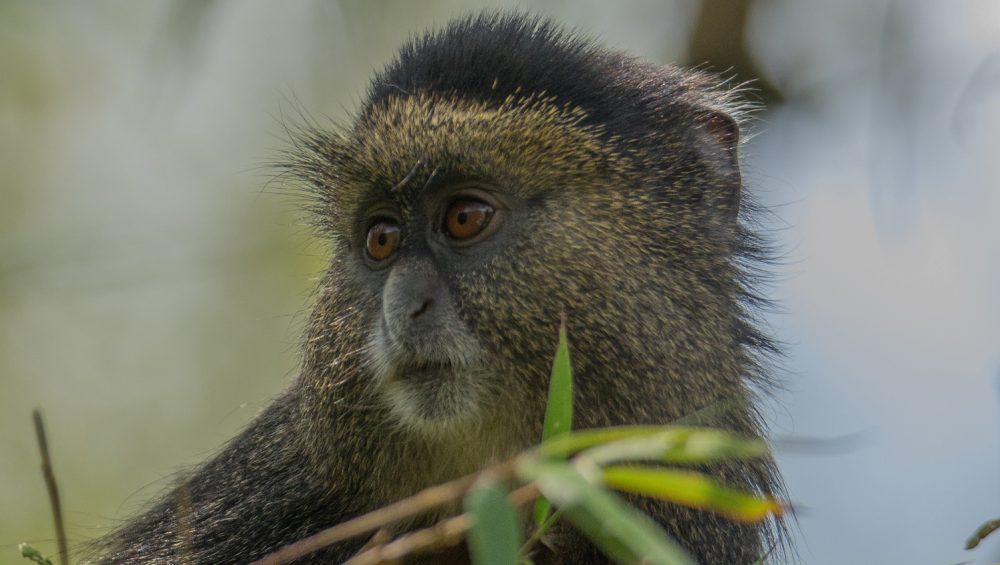
Golden Monkey in Volcanoes national Park. 3 Days Rwanda Discovery Journeys to Rwanda

Discovery Journeys To Rwanda

Discovery Journeys to Rwanda feature the most adventurous Rwanda Tours you can be part. Rwanda is among the best wildlife safari destinations in East Africa and Discovery Journeys there are rewarding.

Just like any other East African country, Rwanda has come a long way in terms of wildlife conservation. Its wildlife was greatly affected by poaching and civil war in the 1980s and early 1990s. In Akagera National Park some wildlife species had gone extinct.

Over the years the government of Rwanda in partnership with Africa Parks have done a tremendous job and now the park fully restored. There are several experiences one can enjoy on Discovery Journeys to Rwanda and they include the following.

Birding Discovery Journeys

Rwanda is a great birding safari destination with over 750 bird species. These are evenly distributed in the different ecosystems the country has. Rwanda birding safari destinations include Akagera National Park that is also East and Central Africa’s largest protected wetland. The park is Rwanda’s second most Important Birding Area with about 480 bird species 100 of which are endemic.

Akagera has a diverse ecosystem with wetland and savanna vegetation thereby supporting a vibrant bird life. Some of the birds you can see on a birding safari to Akagera include the African Fish eagle, grey crowned cranes, Lesser Jacana among others. The rare shoebill stork is also present in Akagera and birding safaris here are truly remarkable.

Rwanda has a mountainous landscape from which it was named the land of a thousand hills. Among the great mountains in Rwanda include the Virunga massif in the north western part.  Southwestern Rwanda is also hilly with several mountains covered with a tropical rainforest (Nyungwe Forest).

Nyungwe forest is located in the western arm of the Albertine Rift Valley and it is Rwanda’s most important birding area. The park is home to over 350 bird species  29 of which endemic to the Albertine Rift.  Notable bird species you can spot here include the great blue Turaco, Rwenzori Turaco, Regal sunbird, and the Rwenzori Night Jar. Birding Discovery Journeys to Rwanda are rewarding and highly recommended for any one visiting the country.

Gorilla Trekking Safari Journeys

Mountain gorillas are among man’s closest primates with a 95% DNA similarity. They are among the two surviving species of eastern gorillas along with their counterpart eastern lowland gorillas. Mountain gorillas live in the forested mountains of the Virunga massif, the Bwindi Impenetrable Forest and adjacent Sarambwe reserve.

Rwanda shares the Virunga massif with Uganda and Democratic Republic of Congo. The massif has 8 Volcanoes 5 of which are in Rwanda laying along the border with Uganda and DRC. They include Mount Karisimbi and Mount Bisoke on the Rwanda DRC border, Mount Sabyinyo on the Rwanda, Uganda and DRC border, Mount Muhabura and Mount Gahinga on the Rwanda Uganda Border. It is in these forested mountains where you find mountain gorillas.

The Virunga mountains have 3 mountain gorilla national parks. They include Rwanda’s Volcanoes National Park, Virunga and Mgahinga Gorilla Park in DRC and Uganda respectively. Mountains are endangered primates with their total population is estimated at 1063 individuals.  The mountain gorilla population in the Virunga massif is estimated at around 600 with the highest population living in Volcanoes National Park.

Rwanda Gorilla Trekking

Rwanda’s Volcanoes National Park has 20 gorilla families 12 of which are fully habituated and open for tourism visitation. Each mountain gorilla family has individuals ranging from 5 to 20 or more and is strictly tracked by 8 tourists a day.

Gorilla trekking adventures are life changing as you get to meet one of the most rare primates. An encounter with mountain gorillas gives you a glimpse of their life and opportunity to see other wildlife species.

Join our Mountain gorilla trekking Discovery Journeys and hike through the Virunga Mountains to meet these rare species. You can do a 1 day excursion or more depending on your time and preferences. Our 3-day Rwanda Tour features mountain gorillas and golden monkey trekking. The 5-day Rwanda Tour is longer to include a visit to Nyungwe Forest for chimpanzee trekking. These are a must do a visit Rwanda safari.

Big Five Classic Safari

Akagera National Park is the only savanna wildlife ecosystem where you can have classic wildlife safaris in Rwanda. The Park is the largest wetland in East and Central Africa. It has a diverse ecosystem to also include savanna grassland and woodlands.

Akagera is home to savanna’s the big five mammals that are buffaloes, elephants, lions, rhinos and leopards. These are often seen on game drives along the different trails in the park. Other notable wildlife in Akagera include giraffes, zebras, topi’s, elands, waterbucks and many others.

Safaris in Akagera National Park can be done on exclusive visits to the park or alongside other national parks in Rwanda. These safari adventures feature primate expeditions to Nyungwe and Volcanoes National Park. To fully explore all these destinations you need at least 10 days spending 2 nights or more at every destination. Our 10-day Rwanda safari caters for that and is the ultimate Rwanda safari tour. This can be further customized to add other Rwanda safari experiences.

This time up to May is still a great time for a safari in Rwanda. Migratory birds set in until May making Rwanda safari tours more enjoyable.

Where to Stay

There are several accommodation facilities where you can base from when exploring destination Rwanda. They range from budget to high end luxury options but have to be booked in advance since Rwanda is a busy safari destination. 

Notable lodges in Volcanoes National Park include Bisate Lodge, Da Vinci Lodge, Five Volcanoes, and Sabyinyo Silverback. Akagera National Park has a few options including Magashi Camp, Akagera Game Lodge and Ruzizi Tented Lodge. 

Nyungwe Forest has one high-end safari Lodge; Nyungwe Oneandonly House. Deluxe options include Nyungwe Top View Hotel, Emeraude Kivu Resort and Marina Mantis Bay.

Ensure to book your Discovery Journeys to Rwanda in advance for the ultimate safari experience.